
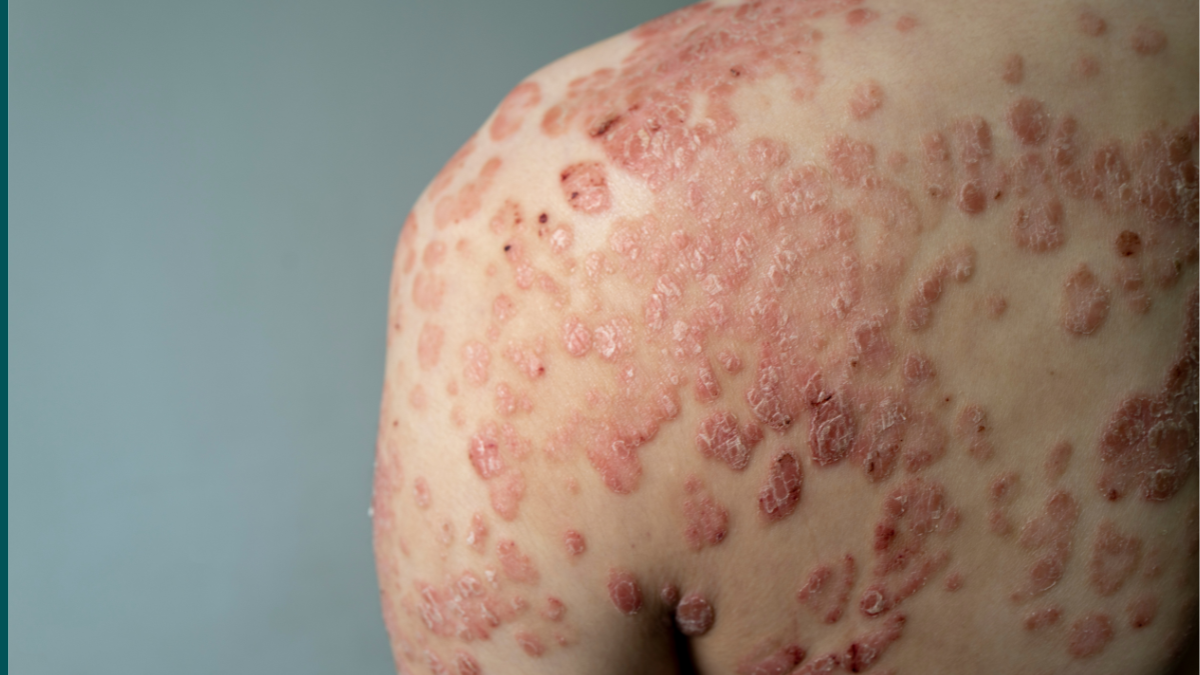
Psoriasis is one of those conditions that teaches patients to lower their expectations. They get a flare, they get treated, the patches clear up, and then weeks or months later it comes back. Sometimes in the same places. Sometimes in new ones. Sometimes worse than before.
After years of this cycle, many patients arrive at my clinic having accepted relapse as inevitable. My first task is usually to challenge that assumption. Recurrence is common with conventional psoriasis treatment. It is not unavoidable.
Why Psoriasis Keeps Returning
To understand why psoriasis recurs so consistently under standard treatment, you need to understand what psoriasis actually is. Psoriasis is an autoimmune condition the immune system mistakenly attacks healthy skin cells, triggering abnormally rapid cell turnover. Skin cells that normally take three to four weeks to mature and shed are turned over in three to four days, resulting in the characteristic thick, scaly patches.
Standard treatment topical steroids, immunosuppressants, biologics works by suppressing the immune response locally or systemically. The patches clear because the inflammatory attack on the skin is temporarily inhibited. But the immune system dysfunction that caused the attack in the first place has not been corrected. The moment the suppression is reduced or stopped, the immune system resumes its aberrant activity and the patches return.
The Role of Triggers
Psoriasis has both a genetic predisposition and trigger factors. The genetics create the susceptibility the triggers determine when and how severely it manifests. Common triggers include emotional stress, infections (particularly streptococcal throat infections), certain medications, alcohol, and even physical trauma to the skin. In many patients, the relationship between triggers and flares is not immediately obvious because there is often a delay of two to four weeks between the trigger and the flare.
Effective psoriasis management has to identify and address individual triggers alongside treating the immune system dysfunction. Treating the skin while ignoring the triggers is like putting out a fire while the gas is still flowing.
What a Root Cause Approach Looks Like
Homeopathic treatment for psoriasis works on two levels simultaneously. First, it addresses the hyperactive immune response constitutionally meaning the treatment is individualised to the patient’s specific immune pattern, not a generic immunosuppressant protocol. Second, it takes into account the patient’s complete picture their stress levels, past illnesses, dietary patterns, and the specific characteristics of their flares to identify and reduce the triggers that are sustaining the condition.
This is a fundamentally different approach from suppression. The goal is not to stop the immune system from expressing the condition it is to correct the dysregulation so that it no longer has a reason to express it.
What Patients Experience During Treatment
Constitutional homeopathic treatment for psoriasis is not fast. The initial phase often involves a gradual reduction in the frequency and severity of flares rather than immediate clearing. Over time typically over several months of consistent treatment both the intensity of flares and the intervals between them change significantly. Many patients eventually reach a point where flares become rare rather than cyclical.
The other thing patients report is that the treatment period does not feel like suppression. There are no steroid side effects, no skin thinning, no systemic immunosuppression. The body is changing, not being overridden.
Rethinking the Baseline
If you have had psoriasis for years and have accepted that it will always come back, I would ask you to reconsider that baseline. Recurrence is a feature of suppressive treatment, not of psoriasis itself. The question worth asking is not how to manage the next flare it is whether the condition can be treated at a level that reduces the likelihood of there being a next flare at all.